

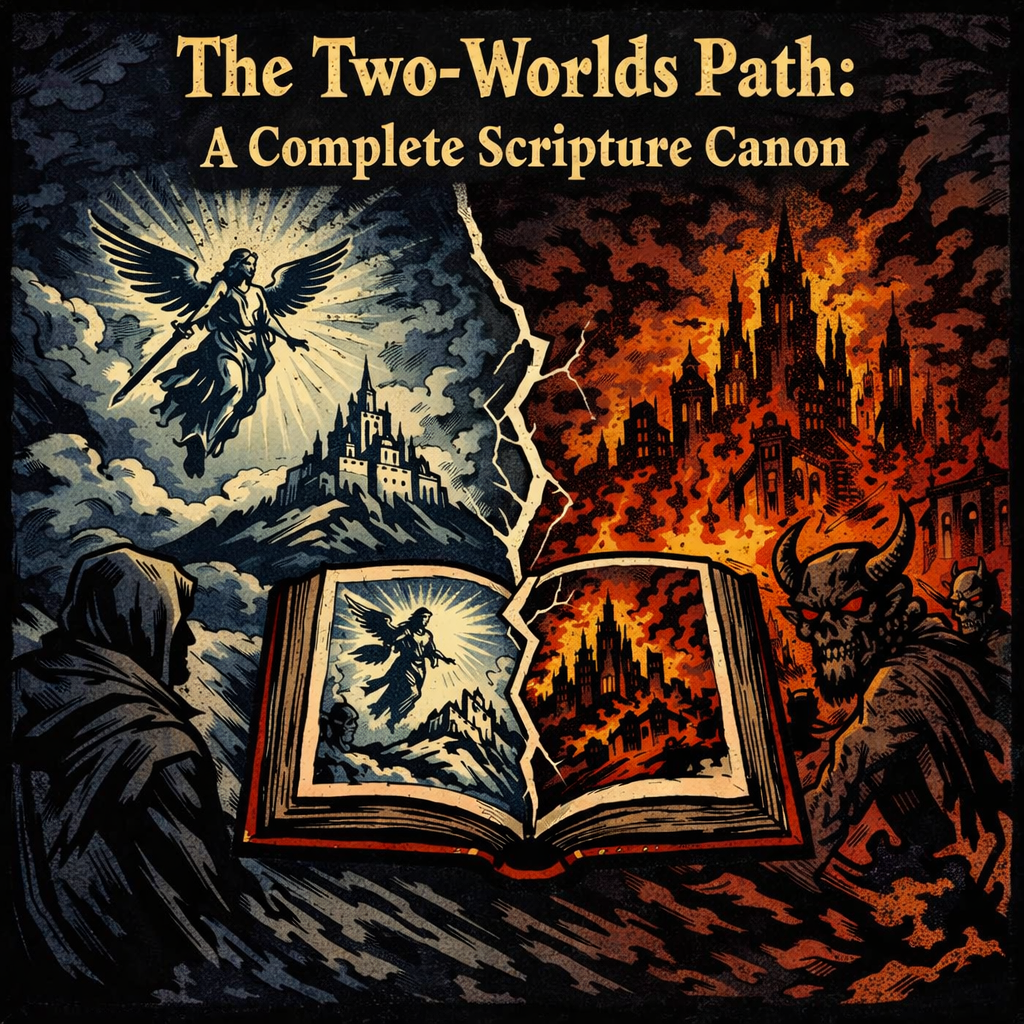
Book XIII: The Great Turning is the Two-Worlds Path’s canon of elderhood, death, mourning, sacred burial, and living legacy. Rather than treating death as a failure or interruption, this scripture frames it as the final threshold of a human life — a passage that asks for preparation, reverence, community, and courage. It teaches that Elderhood is not simply old age, but a conscious turning toward service, transmission, blessing, and the care of future generations.
The canon draws from many of the world’s death traditions — including Mesopotamian, Egyptian, Tibetan Buddhist, Hindu, Celtic, Yoruba, Dagara, Norse, Jewish, Islamic, Indigenous North American, and Mexican/Mesoamerican practices — while emphasizing respectful reception rather than ownership. From these traditions, it gathers shared wisdom: the dead should be tended with love, grief must be witnessed, the body should return to the earth with dignity, and memory is a sacred responsibility.
At its heart, The Great Turning offers both doctrine and practical guidance. It explains the soul’s passage through the Deep Liminal, the Seven Gates of release, the role of the Death Guardian, the creation of a Soul Document, the Book of Passage, natural body care, the Watcher’s Vigil, funeral rites, the Seven Nights of Speaking, and the Forty-Ninth Day release. It also teaches that grief is not something to “get over,” but love transformed — something the community must help carry.
The book closes by turning toward legacy: what we leave behind in character, work, relationships, and unresolved wounds. It calls each Walker to prepare honestly, love fully, repair what can be repaired, and preserve the stories of the dead so they do not suffer the “Second Death” of being forgotten. In this way, The Great Turning is not only a scripture about dying — it is a guide for living more consciously because death is real.
Book XIII: The Great Turning is the Two-Worlds Path’s canon of elderhood, death, mourning, sacred burial, and living legacy. Rather than treating death as a failure or interruption, this scripture frames it as the final threshold of a human life — a passage that asks for preparation, reverence, community, and courage. It teaches that Elderhood is not simply old age, but a conscious turning toward service, transmission, blessing, and the care of future generations.
The canon draws from many of the world’s death traditions — including Mesopotamian, Egyptian, Tibetan Buddhist, Hindu, Celtic, Yoruba, Dagara, Norse, Jewish, Islamic, Indigenous North American, and Mexican/Mesoamerican practices — while emphasizing respectful reception rather than ownership. From these traditions, it gathers shared wisdom: the dead should be tended with love, grief must be witnessed, the body should return to the earth with dignity, and memory is a sacred responsibility.
At its heart, The Great Turning offers both doctrine and practical guidance. It explains the soul’s passage through the Deep Liminal, the Seven Gates of release, the role of the Death Guardian, the creation of a Soul Document, the Book of Passage, natural body care, the Watcher’s Vigil, funeral rites, the Seven Nights of Speaking, and the Forty-Ninth Day release. It also teaches that grief is not something to “get over,” but love transformed — something the community must help carry.
The book closes by turning toward legacy: what we leave behind in character, work, relationships, and unresolved wounds. It calls each Walker to prepare honestly, love fully, repair what can be repaired, and preserve the stories of the dead so they do not suffer the “Second Death” of being forgotten. In this way, The Great Turning is not only a scripture about dying — it is a guide for living more consciously because death is real.